Showing posts with label Myopia. Show all posts

Tuesday, 1 March 2016

7 eyecare tips for screen addicts

The Straits Times

Seven eyecare tips for those who are often glued to their computers and other devices

By Poon Chian Hui
Assistant News Editor 

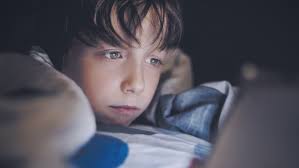
People are often glued to screens these days, from mobile phones to tablets as well as television sets, laptops and computers. Indeed, some can end up gazing at a screen all day - at home, at work and even while on the move.


Whether you are a video game addict or social media maven, looking at such screens for prolonged periods of time can tire your eyes and cause vision-related problems. Some symptoms include eye pain and fatigue, blurred vision, redness in the eyes and the need to blink more or close your eyes more often.

This is known as computer vision syndrome and, despite the name, it can occur with the use of handheld devices like the mobile phone or tablet, said Dr Lee Sao Bing, medical director of Shinagawa Eye Centre at Wheelock Place.

"The level of discomfort increases with the amount of computer use or screen time...Our eyes get dry from prolonged use. We tend to blink less when concentrating on the computer or television screen."


Dr Lee gives tips on how you can avoid computer vision syndrome.

CHECK THE PRESCRIPTION OF YOUR GLASSES OR LENSES

Ensure that the prescription is appropriate for close computer work. Glasses or contact lenses that are not of the correct power will cause your eyes to tire easily.

ENSURE GOOD LIGHTING

Proper lighting can help to achieve maximum comfort and, if you are at work, productivity. When in the office, for instance, try to angle your monitor away from light sources and windows so that there is no light reflecting off the screen. This can cause visual disturbances, such as glare and difficulty in seeing words on the computer screen.

ADJUST THE BRIGHTNESS AND CONTRAST OF THE SCREEN

Toggle the display settings of your computer or mobile device so as to achieve a similar level of brightness as your surroundings. As a guide, if you cannot read the words well, the screen may be too dim, while a screen that is too bright will feel glaring to your eyes.

REST YOUR EYES FREQUENTLY

Your eyes will become drier the longer you spend looking at the screen. A strong draught from air-conditioning also tends to aggravate this problem.

Take frequent breaks from the screen to prevent headaches, blurry vision and dry eyes. Look away or close your eyes every half an hour.

If your eyes are dry, consider using lubricating eye drops. These can be found at pharmacies and eye doctors' clinics.

INCREASE POINT SIZE OF FONT

This will help to reduce eye strain. Increasing the point size of the font may also improve your reading experience. This is helpful if you are reading long documents or have to spend hours editing on your computer or mobile device.

DON'T 'OVERWEAR' OR MISHANDLE YOUR CONTACT LENSES

Wearing such lenses for a prolonged period of time, coupled with inadequate cleaning of the lenses, can lead to a variety of eye infections. Some infections may even cause blindness. Contact-lens use will dry your eyes out over time. If you are expecting a long day in front of the computer, for example, wear glasses in place of contact lenses when your eyes become too dry.

GET YOUR EYES CHECKED REGULARLY

Going for eyecare examinations, either by an optometrist or ophthalmologist, will ensure that you still have the appropriate prescription for your glasses or lenses.

A doctor can also prescribe the appropriate treatment if your eyes are found to be too dry.

Monday, 10 August 2015

New five categories of MMD

Interesting new look at myopic macular degeneration. Click here to read more. 

Myopic Macular Degeneration (MMD)

MMD is also known as myopic maculopathy and myopic choroidal neovascularisation but to help with public awareness, the term MMD is preferred because of the widespread use of age related macular degeneration being the age related form while MMD is the myopic related form. 

MMD is the most common cause of vision impairment in patients with myopia with 10 per cent of those with pathologic myopia developing myopic macular degeneration (via choroidal neovascularisation (CNV)). 

Signs of MMD include chorioretinal atrophy, patchy chorioretinal atrophy, lacquer cracks, choroidal neovascularisation (CNV) and CNV-related macular atrophy in the presence of higher levels of myopia. 

Early signs of a tessellated fundus are likely to develop into diffuse atrophy or lacquer cracks, patchy atrophy or choroidal neovascularisation and finally into MMD. Until recently this condition was rarely separated from age related macular degeneration and in official WHO reports it is classified in the “other” category.

In response to the need to recognise and record cases of MMD, Ohno-Matsui et al.19in 2015 developed and recommended a five category grading scale. They noted that the definition of MMD had not changed since it was first identified in 1970 nor was there a generally accepted grading scale. 

The scale developed by Ohno-Matsui et al. has, “five categories of myopic maculopathy including “no myopic retinal degenerative lesion” (category 0), “tessellated fundus” (category one), “diffuse chorioretinal atrophy” (category two), “patchy chorioretinal atrophy” (category three), and “macular atrophy” (category four).”

They also identified lacquer cracks, myopic choroidal neovascularisation and Fuchs spots as “plus” lesions to supplement their categories.19 Adoption of such a system will allow for comparisons between studies to be made more accurately and enable better recording and reporting of this blinding condition.

The public already has an awareness of the term “age related macular degeneration” and so the concept of myopia macular degeneration is likely to be understood as macular degeneration that happens in people with higher amounts of myopia. 

Second, there is also a significant distinguishing feature of myopic macular degeneration; as Ohno-Matsui points out, it often affects individuals in their productive years, while age related macular degeneration usually affects individuals who are no longer in the workforce. Thus the economic burden is likely to be significantly higher for MMD than for AMD. In addition to the treatment costs and cost of care there will also be a loss of productivity.

Sunday, 16 November 2014

Mobile game to treat lazy eye?

Nov 13, 2014
The Straits Times

By Lester Hoi

Ideas for a mobile game to help children with lazy eye improve their condition and an app which translates dialects into English or Mandarin were the winners in the inaugural Solve for Tomorrow competition.


A team from the Singapore Management University, Eyenovation, clinched first place in the university category of the competition organised by Samsung. Its idea was a game that is split into two visual parts and played with goggles. The stronger eye sees the static elements of the game, while the lazy eye sees the moving elements.

“To use the example of Tetris, the stronger eye will see the bricks that are fixed at the base, while the lazy eye sees the moving bricks that are falling,” said team member Leonard Li, 23. The idea is to force the lazy eye to “relearn” how to see without depending on the stronger eye.

Six teams – three from the university and three from the polytechnic categories – presented their ideas. The competition is aimed at getting students to use technology to come up with solutions to social issues in Singapore.

Winners get a $10,000 cash prize, a study trip to Samsung’s headquarters in South Korea and an internship opportunity at Samsung Singapore. Ngee Ann Polytechnic’s team, First Words, topped its category for its conceptualisation of a mobile app that translates Chinese dialects into English or Mandarin and vice versa through speech recognition software.

One of the judges, Ms Karen Ngui, head of group strategic marketing and communications of DBS Bank, said: “All six finalists demonstrated how technology can be humanised to better impact how we live each day.”

Wednesday, 18 December 2013

Eye-drops for kids with severe myopia

The Straits Times
Dec 18, 2013

By Salma Khalik

CHILDREN who suffer from rapidly deteriorating myopia can now turn to a new treatment offered by the Singapore National Eye Centre (SNEC). Its low-dose atropine eye-drops, which cost less than $20 for a month’s supply, can slow down short-sightedness by as much as 60 per cent, said Professor Donald Tan, the SNEC’s medical director. “It would be fantastic if a child who would normally end up with myopia of 800 degrees is able to keep it to 400 degrees or less,” he added.

The SNEC will provide the drops to as many children here as possible. But if its paediatric clinics cannot cope with the expected high demand, Prof Tan said the centre will open more clinics.
About one in six children here suffer from severe myopia of 600 degrees of more by the time they are in their late teens. This puts them at risk of getting cataract at an early age as well as other eye problems like macular degeneration and retinal detachment.

SNEC’s five-year trial of 400 children, which began in 2006, found that the daily use of low-dose atropine showed no noticeable side effects. Instead the drops, which retard the elongation of the eyeballs which leads to myopia, proved a success in slowing down the condition. For some children, it even arrested the short-sightedness from getting any worse. 

Prof Tan’s wish is to see the drug became widely accessible, but there are regulatory hurdles to overcome. The SNEC tried to interest pharmaceutical companies to produce the eye-drop, but with no success. Prof Tan said this is because the company would need to carry out expensive trials to get regulatory approval. 

But because it is an old drug that is no longer under patent, once a company has obtained approval, others could simply produce and sell similar eye-drops. SNEC finally decided to pay a company to make the eye-drops. But until large-scale trials are conducted to meet regulatory demands, these drops can be dispensed only by SNEC’s pharmacy, and all patients have to be logged.

Prof Tan hopes to be able to conduct trials that will satisfy health regulators within a few years – together with eye centres in other Asian countries facing a high incidence of myopia, such as China. When that happens, the eye- drops can then be dispensed by any doctor. Until then, SNEC will be the only place supplying these eye-drops to patients in general to prevent worsening of myopia.
About 85 per cent of teens here are myopic, with the condition generally starting when a child is five or six years old. 

Usually, the fastest deterioration occurs between the ages of seven and nine years. Prof Tan stressed that while the drops can slow the progression of myopia, they cannot cure it.

Parents can call 6227-7266 for an appointment, or e-mail appointments@snec.com.sg
Those who want subsidised treatments need a referral from a polyclinic. Parents should bring along proof of their child’s deteriorating myopia, such as the need for a new pair of spectacles every few months.

salma@sph.com.sg

Tuesday, 11 June 2013

Keep myopia at bay

A sign spotted at West Coast Park, Singapore. Sound advice! 

Tuesday, 13 November 2012

S'pore is global leader in eye research

Nov 11, 2012
The Straits Times

By Alphonsus Chern

Founded in 1997 with just 11 employees, the Singapore Eye Research Institute (Seri) now has 192 staff, and plans to double its strength over the next decade. It does more than 90 per cent of eye research here, and its prolific output has catapulted Singapore into the global top spot in the field, ahead of heavyweight eye research centres in the United States and Britain.

According to Web of Science, an online academic citation index, Seri is among the top four publishers of ophthalmology-related publications worldwide, alongside the University of London's Moorfields eye hospital, and the Johns Hopkins and Harvard universities in the US.

The journal International Ophthalmology has also highlighted Singapore as the leading contributor of publications per population worldwide. By December last year, Seri conducted more than 850 eye-related studies, received over $120 million in competitive grants, published more than 1,400 scientific papers, received 200 awards for its work and registered 37 patents for its inventions.

It is also punching above its weight in other areas of research. For instance, it has found a way to reliably predict diseases such as stroke, diabetes, hypertension, dementia and kidney disease by looking at retinal blood vessel damage.

A research study that analysed the retinal images of 15,000 patients, combined with the person's age and blood pressure, was able to predict a stroke with 80 per cent accuracy. This method is now being tested in some clinics, but the project is still several years away from completion.

With just $3 million in annual core funding from the Ministry of Health, Seri competes with other groups here and overseas for additional funding, and is hoping to raise more money through endowment grants for research.

It has also run out of space, and there are plans to house the institute together with the Singapore National Eye Centre in a new building, so that researchers can remain in close contact with the doctors who see about 275,000 patients every year.

Seri's Other Breakthroughs

Ocular drug delivery system

Researchers at the Singapore Eye Research Institute (Seri) have found a way to inject slow-releasing drugs into the eyeball. This could free people with glaucoma from having to use eye drops daily or risk a worsening of their condition, which could lead to blindness.

Designed to mimic cell membranes in the human body, the special particles developed at Seri can stay in the eye for up to four months, slowly releasing the medication. If trials show the injection treatment works, it could benefit the 10,000 people who go to the eye centre for glaucoma treatment every year.

Corneal surgery

A new laser treatment to correct short-sightedness may be able to reverse it later in life, when patients develop presbyopia, or long-sightedness, instead. Unlike conventional Lasik surgery that vaporises corneal tissue, the new surgery removes a lens-shaped piece of the cornea without destroying it. The piece of corneal tissue, called a lenticule, can be stored and later retrieved to treat the same patient's presbyopia.

It can even be donated to corneal transplant patients. This procedure is not unlike cord blood banking, where an infant's cord blood, stored at birth, may be used years later to treat immune system and blood-related disorders.

Fighting myopia, 1 eye drop a night

Nov 11, 2012
The Straits Times

By Alphonsus Chern
Photojournalist

Singapore researchers have found a way to put the brakes on myopia in children, and even improve the eyesight of a lucky few. Doctors say a simple eye drop could be the best solution to fighting short-sightedness, which afflicts eight in 10 people here by the time they are adults.

"We think we have found the answer to reducing the progression of myopia in children," said Professor Donald Tan, chairman of the Singapore Eye Research Institute (Seri), who led the latest study.

"There is reasonable evidence that reducing near-work activities such as reading and playing computer games may slow it down, but not by such a huge margin as the eye drops."

Seri has tried battling myopia on several fronts - using computer software to exercise the brain and an eye gel, for example - but nothing has proven as successful as the latest eye drops. They contain a very dilute solution of the chemical atropine, which has been proven to slow myopia, but can cause problems such as glare and the loss of near vision in higher concentrations.

"We were extremely pleased to find that the children had almost no side effects and the drug was absolutely safe," said Prof Tan of the latest study.

Singapore is the myopia capital of the world, where 7 per cent of five-year-olds are short-sighted and more than 60 per cent are myopic by the time they are in Primary 6. High myopia rates mean more individuals have severe myopia, said Dr Audrey Chia, an adjunct clinician investigator at Seri, adding that they are also at risk of developing potentially blinding eye conditions such as retinal holes, retinal detachment and even glaucoma.

With the new eye drops, myopia in an average child increased at only half the usual rate, so a child who might have had a short-sightedness level of 1,000 degrees in one eye might have a level of just 500, she added. Such eye drops generally do not work on adults as their myopia, if any, would be fully developed.

Myopia occurs when the eyeball grows longer than normal, making it unable to focus on distant objects, and atropine works by slowing this growth. Seri's study was the first in the world to fine-tune the dosage. At a 0.01 per cent concentration - 100 times lower than previously used - the solution worked well with no side effects.

"We feel we have finally arrived at an ideal therapy in 0.01 per cent atropine eye drops," said Prof Tan. "No other approach seems to be as effective and safe."

The five-year trial that ended last year involved 400 children, aged six to 12, who applied a single drop every night.

Anglo-Chinese School (Independent) student Nikhil Daniel Angappan was 10 when he joined the study. At the time, he was moderately short-sighted, with 225 degrees in the left eye and 250 degrees in the right. Now 16, his short-sightedness has stopped at 150 degrees in his left eye and 175 degrees in his right.

"This really was a fantastic programme," said Nikhil, who likes to play rugby. "There was a reduction in myopia and I was still able to have an active lifestyle."

The eye drops are expected to be available to all children here by the middle of next year.At the same time, a further study involving up to 600 children will begin, said Prof Tan. This will fulfil drug registration requirements and test the new eye drop's performance in a real world setting.

Tuesday, 31 July 2012

Researchers shed light on high myopia

The Straits Times
July 29, 2012
By Chang Ai-Lien

Researchers in Singapore have for the first time discovered genes associated with super high myopia that afflicts one in seven young people. They hope to have fine-tuned, in a few years' time, a test to identify such sufferers for early treatment - before they become severely myopic and at risk of going blind.


'The idea is to produce a test for several significant genes and combine it with behavioural traits, so we can single out which child will become myopic early and suffer a rapid progression of the condition,' said Professor Saw Seang Mei, vice-dean of research at the National University of Singapore's (NUS) Yong Loo Lin School of Medicine.

Special eye drops, contact lenses or spectacles could then be used to retard the progress.

'We have solved most of the puzzle,' said Prof Saw, who is also with the university's Saw Swee Hock School of Public Health.

She was involved in the massive research effort to uncover the genetic basis of myopia, together with scientists from institutions such as the Singapore Eye Research Institute, the Genome Institute of Singapore and the Duke-NUS Graduate Medical School. The project combined the results of three large studies on 5,000 myopic adults and children here, comparing their genetic make-up to those without the condition.

It has identified several particular locations in a person's DNA associated with high myopia of 600 degrees and above, and future tests will home in on these genetic variations. When someone has myopia or short-sightedness, he sees near objects clearly but distant objects appear blurred. This is because the focal point of a visual image falls in front of the retina instead of directly on it, and the eyeball may be too long from front to back.

One of the leading causes of visual impairment and blindness, myopia poses a significant public health burden in the region. Asia is experiencing a myopia epidemic, particularly in its big cities. Rates of the visual defect have been rising over the past two decades. In Singapore, the myopia capital of the world, eight in 10 people are short-sighted by the time they are 18.

Short-sightedness, typically caused by an elongated eyeball, is the result of both genes and the environment. Children here are more likely to spend their time reading or using the computer instead of going outdoors and being exposed to sunlight, which encourages the body to produce the chemical dopamine, which can prevent the eyeball from becoming elongated.

'With a predictive tool that combines gene tests with environmental factors, we can recommend the treatment for those who need it the most,' said Prof Saw.

The latest work, a combined effort of 15 local and international groups, was published in the journal PLoS Genetics last month. By the end of next year, the team expects to have a blueprint of the main genetic variants linked to myopia, after including data from the Consortium of Refractive Error and Myopia, an international consortium of 40 studies. The team expects to have a pilot test for high myopia ready in two to three years.

Associate Professor Teo Yik-Ying, head of the public health school's biostatistics domain, said: 'We are in a good position to be among the leaders in developing such tools because we have the technology and population diversity to do so.

'With our ethnic diversity, our population represents half the world.'

Friday, 6 July 2012

Will computers make you blind?

As a child, your mother always said: "Don't sit so close to the TV, or you'll go blind!" But now almost everyone who works at a desk spends their entire day staring at a screen from distances that are most definitely not "mom-approved."


Do all those hours spent staring at your personal glowing portal to the digital world have an effect on your eyesight? Recent studies show that Mom might have known a thing or two after all. Eyestrain has also been linked with an increased risk of glaucoma.

Click here to read this wonderful article on how computers can strain your eyes and what you can do about it. No, the answer is not to stop using computers. We know that is impossible in today's world. :) 

Sunday, 6 May 2012

Myopia in kids: Go outdoors

Insufficient time spent outdoors is the main contributor to short-sightedness among children in East Asian cities, including Singapore. 


This is according to a paper published in medical journal The Lancet today. 'Most of (the myopia) we've seen in East Asia is due to the environment, it is not genetic,' said Professor Ian Morgan, a researcher at the Australian National University who co-authored the paper.

The researchers said children who spend two to three hours outdoors a day are 'probably reasonably safe' from getting myopia. This could include time spent on the playground and walking to and from school.

The researchers stressed that being a bookworm or spending time on the computer is not detrimental to eyesight, as long as time is also devoted to outdoor activities during the day. Exposure to the sun's rays is believed to stimulate production of the chemical dopamine, which stops the eyeball from growing elongated and distorting light that enters the eye.

Prof Morgan noted that children in East Asia spend the majority of their time indoors, studying and watching television. More than half of Singapore's 10-year-olds are short-sighted. Its myopia rate is among the world's highest because children here spend only about 30 minutes outdoors after school on weekdays, said Professor Saw Seang Mei who co-authored the Lancet paper.

The professor at National University of Singapore's Saw Swee Hock School of Public Health, who recommends spending at least 10 hours outdoors every week, led a recently-concluded, year-long trial here that took children to parks every weekend to gauge the outdoor effect on myopia. The team is now studying the data.

Monday, 30 May 2011

The right lenses and frames

By Kym Ong
MDS Treasurer

Great weather, a delicious orange chiffon cake, a great speaker and a very engaging audience …. This sums up our talk on refractive errors, UV protection and glasses.


When I was younger, my world of eyesight revolved around myopia and astigmatism. When my parents aged, I learnt of Hyperopia (long-sightedness). Even then, these were terms I never understood in depth. From last Saturday’s session, my vocabulary increased by another word Presbyopia and Fifianna also went through a thorough and clear explanation of what all these meant.

In short (very short), by definition:
Myopia
  • Short-sightedness which occurs through i) Axial Myiopia (the length of the eyeball is longer than “normal”) OR ii) Refractive Myopia (refractive power of the eye is higher than “normal”)
  • Light rays entering the eye are focused in front of the retina.
  • Myopia increases risks of retinal detachment, cataract, glaucoma and age-related or myopic macular degeneration.
Hyperopia
  • Long-sightedness which occurs because the length of the eyeball is shorter than normal and the refractive power of the eye is lower than “normal”.
  • Light rays entering the eye are focused behind the retina.
  • Hyperopia can cause eye strain, headaches and intermittent blur vision.

Astigmatism
  • Occurs due to an irregular curvature of the surface of the cornea.
  • Usually occurs with myopia or hyperopia.
  • Light rays entering the eye are focused on 2 points, rather than 1.
Presbyopia (Old-Sightedness)
  • Occurs when the crystalline lens loses its flexibility
  • Usually begins around the age of 40
  • May occur in addition to other refractive errors such as myopia, hyperopia or astigmatism
  • Visual disturbance due to presbyopia
  • Blurry near vision when reading, sewing, computer work or other near tasks
Prescriptive Glasses - Choosing the right type
Lens Selection
There is a wide variety to choose from for lenses. There are single vision lens, bifocal lens and progressive addition lens. There are also different types of lens materials like glass (with different features like multicoating, UV coating, hard coating etc), plastic and polycarbonate. Again, comfort is key.


Frame Selection
There is a wide variety of metals, plastics and other types of frame (wood/bone/buffalo hone etc) available in the shops. Comfort is key. Frame shapes and colours can help bring out your features. Here’s a tip from Fifianna with regards to frame shapes.


Ultraviolet Light Protection
As most of us are aware, we need to protect our eyes from UV-A and UV-B. Especially in Singapore where the rays are strong because we sit on the equator. Like applying sunblock when we go to the beach, we need constant protection for our eyes. If you are not convinced, here’s a list of eye problems that could arise and hopefully, this will prod you into better eye habits.

  • Photokeratitis - damage to the outer layers of the cornea due to exposure to intense light
  • Pterygium - triangular thickening of the conjunctiva that may grow onto the cornea and interfere with vision
  • Pinguecula - benign yellowish thickening of the normal conjunctival tissue
  • Cataract - loss of transparency of crystalline lens
  • Age-related macular degeneration (AMD) - research suggests that UV-A rays may play a role in degeneration of macula
  • Climatic Droplet Keratopathy - accummulation of translucent materials in the superficial corneal stroma

Friday, 6 May 2011

MDS Talk: What Glasses to Wear

Topic: What Glasses Should You be Wearing? Understanding Refractive Errors and Ultraviolet Light Protection

Date: May 21, 2011 (Sat)
Time: 2pm to 4pm
Venue: Seminar Room, Alexandra Hospital

Refractive errors such as myopia, astigmatism, hyperopia and presbyopia are the most common causes of blurring of vision in individuals in all age groups. It is not uncommon for these conditions to be confused with one another. In addition, the awareness of the harmful effects of ultraviolet light on the eye is low among the general population.

What type of glasses do you need? Come learn about the different types of refractive errors and the harmful effects of ultraviolet light on the eye and see what options are available for their management.

Our speaker is Ms Fifiana, DipOptom(Merit) (S’pore). She is an optometrist with the Singapore International Eye Cataract Retina Centre at Mount Elizabeth Medical Centre.

Call Anne at 6238-7387, or e-mail alleyes@singnet.com.sg to reserve your places now! This event is free for all MDS members.

Wednesday, 7 January 2009

Beating the global myopia threat

A spreading pandemic of myopia among the world’s urban children may be avoided if children spend at least two to three hours each day outdoors. Australian scientists from The Vision Centre say there is persuasive evidence that increased exposure to daylight can prevent the permanent short-sightedness and eye damage which now afflicts up to 80-90 per cent of children in cities in East Asia such as Singapore and Hong Kong.


The finding demolishes long-held beliefs that short sight is due mainly to reading, and overuse of TVs and computers by youngsters, or is primarily linked to genetic factors. Myopia affects over 1.6 billion people worldwide, is spreading rapidly among city populations and, in its most severe form, can cause blindness by middle-age.

“The prevalence of myopia in the Australian population is dramatically lower than in other urban societies round the world – yet we do just as much reading and computer work,” says Professor Ian Morgan of the ARC Centre of Excellence in Vision Science (The Vision Centre) and Australian National University.

The team’s conclusions are borne out by new research in Singapore and the United States, which has reached similar conclusions.“Looking at children of Chinese origin, we found only 3 per cent of those in Sydney suffered from myopia, compared with 30 per cent in Singapore, where there is an epidemic. Yet, if anything, the children of Chinese origin in Sydney read more than those in Singapore. This clearly suggests that myopia was triggered by something in the environment, rather than the genes. The critical factor seemed to be the fact that the children in Singapore spent much less time outdoors.”

Comparing myopia levels among people of Indian origin, the team noted 5 per cent short-sightedness among rural Indians, 10 per cent among city Indians – and 65 per cent among Indians living in Singapore. “We’re seeing large increases in myopia among children in urban societies all around the world – and the outstanding common factor may be less and less time spent outdoors.

“Humans are naturally slightly long-sighted. We see that in rural populations all round the world. But when you start intensive schooling, and spend little or no time outdoors, you get this dramatic rise in myopia. In some East Asian cities 80-90 per cent of children are affected – and governments and the World Health Organisation are very worried about it.”

“The idea that ‘reading makes you short-sighted’ has been popular for a couple of hundred years. But recent data shows that the time spent indoors is a more important factor. Children who read a lot, but still go outdoors, have far less myopia.”

Professor Morgan explained that myopia is essentially an eye that has grown too long, and once it is too long, you can’t shorten it again: “So you have to stop it happening in the first place.

“Our hypothesis is that the light intensity experienced outdoors – which can be hundreds of times brighter than indoor light – causes a release of dopamine, which is known to block the growth of the eyeball. This prevents it taking on the distorted shape found in myopic people. We are now testing this idea.”

Professor Morgan explained that one of the potential problems with using increased time outdoors to prevent myopia is the potential for increasing skin cancers and for causing eye damage later in life. “Our hypothesis is that the protective effect is based on visible light, acting through the eye. We will be testing this over the next few months and the next stage will be a randomised clinical trial.”

If proven correct, then the prevention of myopia through increased time outdoors will be compatible with "Sun Smart" practices.

The research is being carried out through the ARC Centre of Excellence in Vision Science, the Australian National University and Sydney University, with support from the Australian Research Council, and the National Health and Medical Research Council. The NHMRC-funded Sydney Myopia Study was a large school-based study of over 4,000 Year 1 and 7 students from 55 schools located across the Sydney metropolitan area, carried out by Professor Morgan and his colleagues, Dr Kathryn Rose and Professor Paul Mitchell, at the University of Sydney. The data has been compared to data from the WHO and other national surveys around the world.

Tuesday, 14 October 2008

Outdoor activities can prevent myopia in kids

户外活动时间长 孩童近视几率低

一组来自新加坡国立大学和新加坡眼科研究所(SERI)的研究员进行的调查显示,孩子在户外活动的时间越长,患上近视的几率也越低。由国大杨潞龄医学院的社区、职业与家庭医学系的苏祥美副教授领导的研究小组,在2006年针对1249名青少年进行的调查发现:计算了看书、看电视等近距离工作之后,每天花多一个小时进行户外活动,患上近视的可能性会减少10%。


研究也发现,接受调查的14岁至16岁的青少年当中,有78%已经患有近视,而且他们每天平均花3.24个小时进行户外活动,其中0.76小时是做户外运动。研究人员比较澳大利亚悉尼和新加坡的六、七岁华族孩童的近视率,发现澳大利亚孩童每个星期花13个小时参与户外活动,只有3%患有近视;新加坡孩童每星期花在户外活动的时间只有3个小时,29%已患有近视。

苏祥美告诉本报,新加坡和悉尼的华族孩童有许多相近之处,基因、饮食习惯和生活水平相似,看电视和看书的时间相距不远,而最大的差别就在教育体制。研究报告也指出,悉尼的孩童上小学之前,会接受至少一年的学前教育,主要目的是发展社交能力,孩子也有很多时间在户外活动。相比之下,新加坡孩子在三年的学前教育,着重开发阅读能力,加上孩子到补习班,户外活动的时间也较少。

有趣的是,悉尼孩童花在阅读和使用电脑的时间比新加坡的孩童稍微多出一些,但是近视患者的比例比新加坡孩童低。苏祥美分析说,模糊的视线会促使眼球的发育出现异常。医学界推测,人们集中精神看近距离物品的时候,周边视力其实是模糊的,促使眼部细胞增生,引起近视。不过,进行户外活动时,中心视力和周边视力都是清晰的。

此外,在户外活动时,由于光线较充足,瞳孔会缩小,聚焦在视网膜上面的影像较清晰。苏祥美说:“这两个调查结果证实户外活动有助于预防近视,同时说明孩子们在户外活动的时间不够。我们建议家长改变生活习惯,多陪孩子到户外走动和玩乐.”

本地的7岁孩童当中,有28%患近视。苏祥美和她的组员早在1999年就开始对这些孩童进行长期追踪调查。他们在过去8年,主要着重于找出环境因素和日常习惯如看书、使用电脑,对视力退化产生的影响。新加坡眼科研究所黄天荫教授答复本报询问时指出,我国建立亚洲最大的眼睛疾病研究计划,搜集了多种常见眼疾的资料,研究范围跨越了华族、马来族和印度族。他说:“我们的数据库目前搜集了1万5000人的资料,很快地会扩大到两万人.”

配合社区、职业与家庭医学系庆祝成立60周年,国大和新加坡眼科研究所的研究员昨天上午发表了调查结果。

本地孩童易患近视 有三个可能性
近视在我国非常普遍。新加坡眼科研究所大约四年前进行的调查显示,7岁学生有28%患近视,8岁有34%,9岁有42%,12岁则有62%。此外,7岁至9岁学生当中,有48.7%患有散光。医疗界目前还无法确定近视的确切病因,我国的眼科医生进行的研究,就试图找出近视为何在我国那么普遍。

1) 可能与遗传有关
本地研究人员对本地1979名介于7岁到9岁的孩童展开大规模调查,从他们的身上拿取DNA样本,以便对那些近视和非近视孩童的基因组进行比较,从而通过基因定位研究,找出近视和基因之间的关联。

2) 长得越高 近视越深?
四年前进行的一项本地研究针对1449名来自三所学校的小一至小三华族学生进行调查。研究员把学生按体高分四组比较后发现,长得越高的学生,近视越深,而长得最高的那组比最矮的平均高了50度。

3) 幼儿生活习惯
3000名6个月大到6岁之间的孩童参与一项为期3年的调查计划。研究人员为孩子验眼,邀请父母参与问卷调查,从中了解孩子什么时候开始出现近视,从生活习惯了解近视的原因。调查结果预计在明年出炉。

Friday, 25 April 2008

Software helps myopic kids see better

The Straits Times, April 23, 2008By Lee Hui Chieh

TRAINING the eyes of short-sighted children with a special computer program - for just 30 minutes every other day over 10 weeks - improves their vision, a trial here has found.


After training, 31 primary school pupils could read an average of two lines farther down a typical 11-tier eye chart. An improvement of three lines means one can see something from twice as far as before. The level of improvement stayed the same after a year, and is expected to be long term. On average, children in the trial by the Singapore Eye Research Institute saw their myopia worsen at almost half the typical rate for those their age.

Institute director Donald Tan, who led the trial, said: 'We're very excited. The results have exceeded our expectations. If it works on a larger scale, it will have a profound effect on myopia here.'

Myopia, or short-sightedness, occurs often when the eyeball grows too long, leaving the eye unable to see distant objects clearly. More Singaporean children become short-sighted, and at a faster rate, than children elsewhere. About four in five aged 18 here are myopic, double that in the United States. Myopia rises by 80 to 100 degrees a year for those aged six to 10 here, against 50 degrees in US children.

The computer program, called NeuroVision, improves eyesight by training the brain to better distinguish shapes that do not stand out from the background and to 'sharpen' the images seen by the eye. The patient clicks the mouse button when he sees images flashing on the computer screen; images flash by more quickly or become fainter. After treatment, one sees images more clearly because the brain processes them better, even though the physical shape of the eyes and the degree of myopia remain unchanged.

Studies have shown that, for reasons unknown, an eye that is exposed long term to blurred visuals will become even more short-sighted. The program is believed to slow myopia progression in children by doing the opposite - making the eye see more clearly than usual.

Prof Tan said: 'This is a very attractive option as it uses no drugs, no surgery and causes no side effects.' The trial, which involved Primary 2 and 3 pupils from Evergreen Primary School, was conducted from June 2006 to January this year.

Vivienne Lee, 10, who can see more clearly now, said: 'My myopia was worsening so quickly, I was worried I would go blind. Now it's better.' The institute plans to start a larger trial involving 300 to 400 pupils later this year. NeuroVision, first developed for adults with mild myopia, was introduced here in 2004. The children's version was launched here in 2006.

Four variations for other eye problems have also been developed by the same American company.