Wednesday, 23 February 2011

Use of Eccentric Viewing strategy

MDS Talk
Date:  19 March 2011 (Saturday)
Time: 2pm – 4pm
Venue: Seminar Room, Alexandra Hospital

People suffering from Macular Degeneration typically find difficulties in recognising faces, driving, reading, watching television or even seeing in colour. This is because the central part of the retina (“the macular”) has been affected by the disease. 

Whilst medical treatment stabilises the condition, the visual outcome usually remains to be challenging for patients to cope with during their activities in daily living. Often, this means that one will have to find new ways of doing things and Eccentric Viewing is a strategy that is commonly prescribed during low vision rehabilitation. This will require one to learn a new technique in seeing and particularly whilst using magnifiers.

In short, Eccentric Viewing strategy involves training a non-affected part of the retina (“the para-foveal region”) to be used whilst reading and the method of training using this strategy will be discussed by Mr Yap Tiong Peng. He will also be conducting a demonstration with MDS President Dr Sharon Siddique who had found this technique helpful.

About the speaker
Yap Tiong-Peng is an optometrist at IGARD Group. He obtained his full registration since 1998. His special interest is in Paediatric Optometry, Low Vision, Contact Lenses, Sports Physio Eye Development, Intuitive Colorimetry and Vision Therapy. He conducts Low Vision assessments routinely and he is also an active prescriber of Bioptic telescopes.

Tiong-Peng received his optometry training in Manchester, where he graduated with a UMIST Honours degree. He also completed a Master degree in Engineering and Physical Sciences in Medicine from Imperial College in London. Tiong-Peng is also a sessional part-time lecturer and clinical supervisor. His most recent teaching assignment was to deliver a full course in Advanced Visual Neurophysiology for Singapore Polytechnic - University of Manchester Bachelor of Science degree programme in Optometry. He was formerly a research fellow in Ophthalmology and Visual Science at Alexandra Hospital.

Call Anne at 6238-7387, or e-mail alleyes@singnet.com.sg to reserve your places now! This event is free for all MDS members.


Thursday, 10 February 2011

Blindness cause clue discovered

By Jame Gallagher
Health Reporter
BBC News

An international team of researchers has found a clue to one of the leading causes of blindness, which they hope could eventually lead to a cure. Age-related macular degeneration affects 500,000 people in the UK and is incurable.

The study in the journal Nature found an enzyme known as DICER1 that stops functioning, resulting in the illness. UK experts said it had the potential to be an important breakthrough.

The macula is a part of the eye which sits in the centre of the retina and is responsible for the fine detail at the centre of the field of vision. As the disease progresses that central vision declines, making reading, driving and recognising people difficult. It affects one in 50 people over 50 and one in five people over 85. The exact cause is unknown, but risk factors include smoking, high blood pressure and having relatives with the condition.

The researchers noticed the enzyme DICER1 was less active in the retina of people with the more common "dry form" of the illness and when they turned off the gene which makes the enzyme in mice, then the animal's retina cells were damaged. It was then discovered that DICER1 is necessary for destroying small pieces of genetic material called Alu RNA.
Without DICER1, the Alu RNA accumulates with toxic consequences leading to the death of the retina.


Professor Jayakrishna Ambati, from the University of Kentucky, told the BBC: "This work opens many new doors of research. First, we need to identify various classes of molecules that can either increase DICER1 levels or block Alu RNA so that these can be evaluated in clinical trials.

"Second, we need to understand more about the biological processes that lead to reduction in DICER1 levels and the precise source of the Alu RNA transcripts."

Professor Ian Grierson, school of clinical sciences at the University of Liverpool, said: "This is a great piece of science which provides another jigsaw piece which we need to put together with other findings. It was done in an animal model which is a long way from the patient, the breakthrough is we've got another player."

Professor Mike Cheetham, head of molecular and cellular neuroscience at UCL, said: "It's a potentially very important breakthrough which gives insight into this dry form of the disease. It could provide new pathways to therapy, but the findings need to be validated by other researchers."

Cathy Yelf, spokesperson for the Macular Disease Society (UK), said: "This is a very interesting piece of research and provides us with another valuable piece of the AMD jigsaw. It will not change a thing for patients immediately but it may lead to new treatments in the long term."


Monday, 24 January 2011

A stretch for health

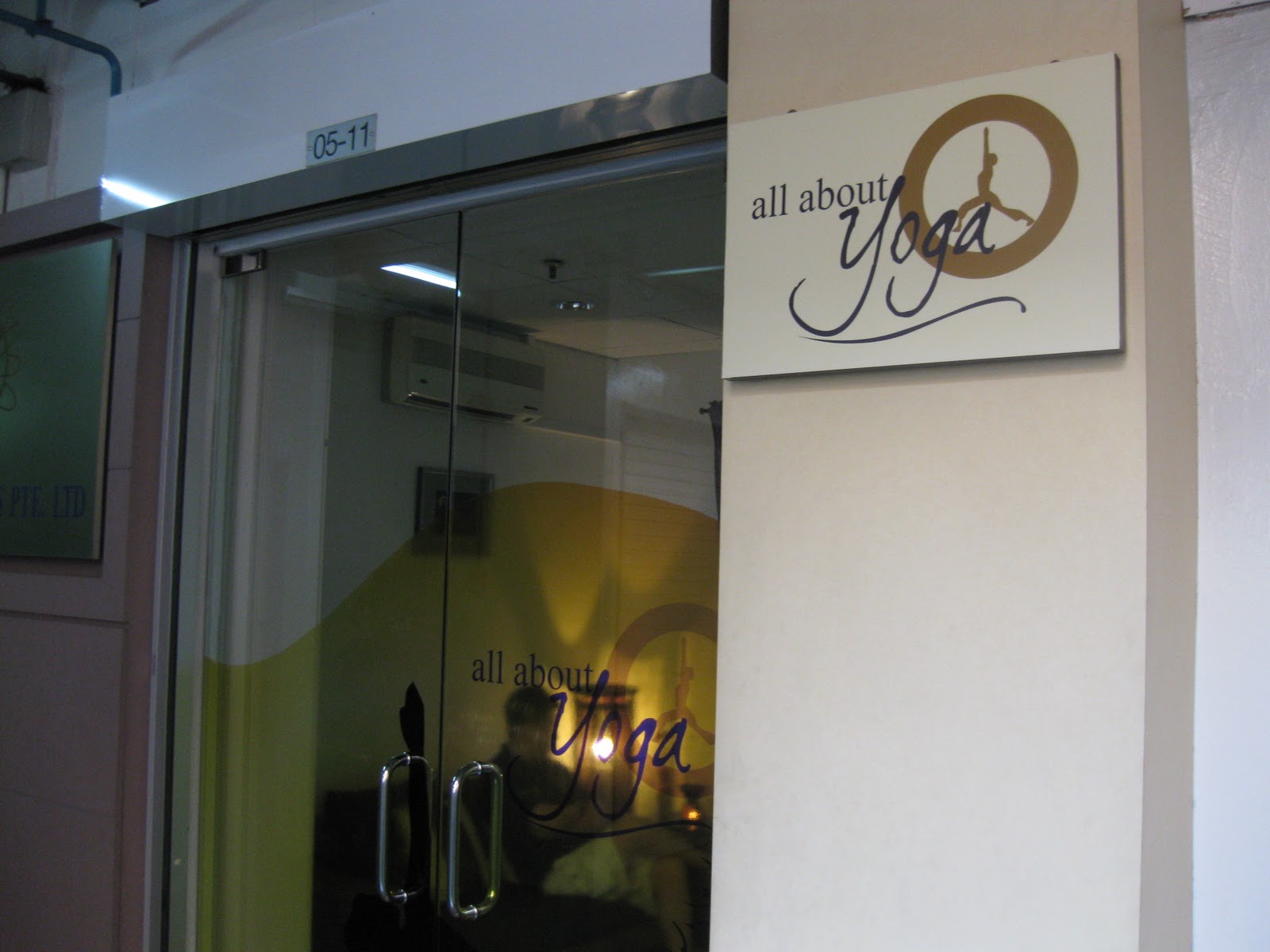
A warrior, a cat and a lotus. For MDS members attending our first yoga session yesterday, poses came with colourful names and quite a bit of groans and moans too. As 21 of us attempted to contort our bodies by the commands of instructor Kang Xiao Jing at All About Yoga studio, the simple act of stretching became quite a monumental task. 


It looked so easy on the instructor. But for most of us,  novices attempting the exercise for the first time, it was a tricky struggle on a warm Sunday morning. Some of us could not balance. Standing on one leg looked effortless for some, but comical for others. Xiao Jing told us to be the warrior. But it was tough to feel like a fighting man when one could barely stand.


Nonetheless, that was what we were looking for - to stay healthy, using yoga to strengthen our muscles through a non-strenuous sport. And our hour-long yoga session certainly gave us a good work out and relaxed our minds. 


A big thank you to our lovely instructor Xiao Jing for kindly conducting the session pro bono. Her enthusiasm was infectious and she very kindly attended to the needs of our older members with great patience. Thanks also to All About Yoga for opening their studio for us on a Sunday. MDS members who are interested in taking up yoga should contact them. Click here for their website. 


Special thanks also to MDS Treasurer Kym Ong for painstakingly organising this free session, coordinating the shuttle service from Paya Lebar MRT station. She called members individually to ensure all would get proper and punctual transport to the venue, and we are most grateful. Her husband also very kindly sponsored the rental of the yoga studio. Thank you!


Tuesday, 18 January 2011

Yoga Reminder

Just a gentle reminder about the yoga date we have this coming Sunday, 23rd Jan 2011. Session starts at 9am. Wear comfortable clothes like shorts, bermudas, track pants, tights, T-shirts, fitting tops.

For those who need the shuttle service, please meet at 8.15am at the Paya Lebar MRT station's pick-up point, which is opposite the Singapore Post Centre.

Those who are going themselves, please make your way to the address below and arrive 15 minutes beforehand.

All About Yoga Studio
605B Macpherson Road
#05-11 Citimac

See Map Below (BLUE DOT)


For a more detailed map, please click here.


Monday, 3 January 2011

Expedition to Antarctica

In December this year, Alan Lock – a former Royal Navy Officer and current member of the Macular Disease Society of the United Kingdom – is hoping to take on one of the toughest challenges in the world: to trek from the coast of Antarctica all the way to the South Pole.


Alan, 30, is organising the expedition with US and British teammates, including a former successful Antarctic explorer and a decorated US Army Veteran. They will cover a distance of nearly 600 miles, expending over 7000 calories per day and taking on one of the harshest environments on the planet.

If Alan is successful in this attempt he will set a new Guinness world Record for this feat. The ‘Polar Vision’ team will be undertaking this challenge in order to raise awareness and funds for two sight related charities: Guide Dogs for the Blind, and Sightsavers International. Guide Dogs for the Blind is a San Rafael, California – based non-profit that serves blind and visually impaired people in the U.S. and Canada. 

Sightsavers International is focused on the developing world, seeking to prevent blindness and provide rehabilitation to some of the world’s most marginalised people. As someone with MD, Alan is also keen to use the expedition to highlight the condition and also to hopefully inspire and motivate other people in a similar situation.


“I am really excited about this project and the positive impact it can have on many people with sight problems. It is going to be a real challenge, both in Antarctica and in trying to organise the endeavour – but if it was easy there would be no challenge!”

“We are trying to reach out to companies who may wish to become corporate sponsors of the team, and if anyone can help us with contacts we would be enormously grateful.”


Click here for the website and here for the promo video. Contact Alan at alan@polar-vision.org