Tuesday, 27 May 2014

The Implantable Miniature Telescope

The Implantable Miniature Telescope is a glass-and-plastic telescope which is implanted in only one eye. 


It magnifies images, projecting them onto a part of the retina that remains healthy, which helps restore central vision. 

Vision in three-fourths of patients in a study leading to approval improved to moderate impairment.

It was approved for use in the United States in 2010. Read here for a report of a successful procedure done in Madison. Click here for our 2012 report on this telescope.


Monday, 26 May 2014

Impact of eye problems, at a glance

May 25, 2014
The Straits Times

By Janice Tai and Joan Chew

Not being able to see well, or at all, is worse than suffering from diabetes, obesity, hypertension and high cholesterol levels. Malays and Indians here are also more afflicted by visual problems than Chinese. These were the findings of a first-of-its-kind study involving more than 10,000 Singaporeans aged between 40 and 80.


It compared the loss of quality of life that poor eyesight brings with that of other chronic conditions, and could possibly guide policymakers working on programmes to tackle eye diseases.


Published in the top eye research journal Ophthalmology last month, the study - which culled data from three other population- based eye studies - found that for every 100,000 people here, the burden of visual impairment for the Chinese was equivalent to 512 healthy people dying every year. The impact was even greater for Malays and Indians, with the figure calculated at 707 and 609 respectively.

Hypertension is second on the list, and its burden is equivalent to 506 Chinese, 599 Indians and 698 Malays dying annually out of every 100,000 people.

The local study also found visual impairment to be associated with anxiety or depression in Indians, but not in Chinese and Malays. The study by researchers and doctors from the National University of Singapore (NUS) and the Singapore Eye Research Institute (Seri) did not find out why this was so.

Principal investigator Assistant Professor Luo Nan from NUS' Saw Swee Hock School of Public Health suggested that it could be due to factors such as social support and economic status. Study co-investigator Marcus Ang, an associate consultant with cornea service at the Singapore National Eye Centre, was not surprised by the findings.

He said that while conditions such as diabetes and hypertension may lead to life-threatening complications, patients may otherwise be symptom-free and can go about their daily activities normally. But eye issues can affect a person's day-to-day living, even making simple tasks such as putting on clothes difficult to perform. He said: "This may lead to feelings of sadness when they are unable to do things they used to enjoy."

Doctors expect an ageing population to lead to more people living with visual impairment. After all, four of the top five causes of blindness here - cataract, glaucoma, age-related macular degeneration, refractive errors such as short-sightedness, and diabetic retinopathy - are linked to ageing.

Dr Ang has observed that patients delay treatment for visual problems, especially those who see poorly with one eye but can still see with the other. It is why Seri is conducting studies to understand Asian patients' health-seeking behaviour, he said.

Prof Luo's team is also studying the economic costs of visual impairment through another study of 1,000 people. Both doctors said they hope primary care doctors can also step in to treat symptoms of visual impairment, since they are already caring for patients with chronic medical conditions.

Housewife Moddiappah Sellamah, 77, was part of the Singapore Indian Eye Study which was analysed for this large-scale eye study. Her daughter, 60-year-old Vaiyapuri Nallamal, said Madam Sellamah is healthy except for the cataracts she has been suffering from over the last two years.

The cataracts, which do not require surgery yet, have caused her to mistake people on the streets and board the wrong bus. Madam Nallamal said the elderly woman, who has an independent streak, "will never admit that her eyes are not good" and it can get exasperating for the family when she insists that the numbers and colours she sees are correct.

Dr Ang said people who experience blurred vision or other visual symptoms should see a doctor for a proper evaluation. Some eye diseases such as glaucoma do not cause symptoms in the early stages, so people with risk factors such as a family history of the disease should still go for eye screenings.

Saturday, 24 May 2014

The promise of single-injection gene therapy

A new gene therapy that could revolutionise treatment of a severe type of macular degeneration has been developed by scientists at the Lions Eye Institute and University of Western Australia.

Macular degeneration can rapidly cause blindness if not treated within a short period of time and is the most common cause of blindness in the developed world.

Click here to read more.

Friday, 18 April 2014

Berry berry bright

Interesting new product for eye health from Japan. Spotted this advertisement in The Straits Times this week. Can't vouch for the quality of this product but thought it might be useful to macular degeneration patients. 

Happy Easter! 


Saturday, 12 April 2014

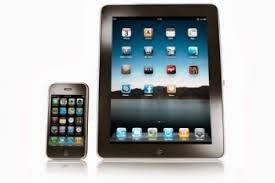
Making iPhones and iPads work for our eyes

Apple's iPhones and iPads have revolutionised technology and lifestyles around the world for millions. Today, it helped change the lives of a few visually impaired Singaporeans too. 

For the first time, the Macular Degeneration Society held a tutorial to teach members how useful iPhones and iPads can be for those who don't see well. Thanks to tech expert Gurmit Singh, some 16 members were taught the basics of making the famous Apples products work for our eyes. 


The zoom function, for instance, was an important feature of iPhones and iPads and Mr Singh showed how easy it was to enhance text and images with the tapping of three fingers. It is easier on the tablets than the phones, he said, because of the larger interface. 


He has difficulty with with the three-finger tapping, he added, saying jokingly that he has "fat fingers". The zoom function takes some getting used to since most of us are used to interacting with our devices with one finger. But it remains one of the most accessible ways to magnify text on a smartphone and tablet. 


Mr Singh also showed how to use other functions such as "invert colours" to have a black background instead of the regular white one. For some visually impaired people, the contrast makes for easier viewing. 


But the function which got members most animated was the Voice Over. It allows text to be read out, allowing those with poor sight to have comfortable, easy and even cool access to their e-mails and instant messages among other things. 


Of course, the famous Siri was also demonstrated, displaying once again how Apple's voice activated intelligent personal assistant can be a life changing app for many with vision impairments. 

A big thank you to Mr Singh for so kindly sharing his knowledge and expertise with us, making a big effort to explain in as simple a way how to use the phones and tablets to our advantage. His patience has given MDS members a most enriching and educational afternoon. 


Monday, 31 March 2014

iPhone and iPad Tutorial

Apple's iPhone and iPad have changed the world. For the visually impaired, the biggest difference has been no less dramatic. 


Features like magnification and voice-to-text used to cost thousands in complex technological gadgets which are difficult to use. Now, they are cheap and intuitive to most users thanks to the iPhone and iPad. 

To help members learn how to make Apple's products work for those with fading vision, we will hold a tutorial with hands-on practice of iPhones and iPads. If you have an iPhone and/or iPad, please take it along. If not, don't worry, we will have devices to be shared. 


Tutor - Tech expert Gurmit Singh (not to be confused with the celebrity with the same name)

Date: April 12 (Sat)
Time: 2pm - 3.30pm
Venue: All For Eyes, #05-23, Tanglin Shopping Centre.

To ensure proper coaching, the class size is limited to 20. First come first served. MDS subscription fee of $20 for 2014-2015 will be collected at the door. 

Call Anne at 6238-7387 or send an e-mail to alleyes@singnet.com.sg to register.

Wednesday, 26 March 2014

Dry Eye Disease

Useful article looking at Dry Eye Disease, including using Intense Pulsed Light (IPL) as a new form of treatment.

Click here to read more.